

Above and below ground, concrete is the world’s most used building material. Ten to 15 per cent of concrete is cement, a kind of glue that binds sand, gravel and water together. Cement is mainly made up of quarried, crushed and heated limestone and shale blended with gypsum. Globally, more than four billion tonnes of cement are produced annually – 14 million tonnes in Canada. However, cement production is also the world’s second-largest industrial CO2 emitter (about seven per cent of total carbon dioxide (CO2) emission globally and 1.4 per cent of Canada’s CO2 emissions).
The Canadian cement and concrete industry has taken up the challenge to reduce environmental damage from carbon emissions with its Concrete Zero action plan. Net-zero concrete means that throughout its life cycle, from initial mining and transportation of ingredients to the manufacturing process to becoming part of concrete and its placement, there will be no net increases in greenhouse gas (GHG) emissions.
“We are committed to sustainability, innovation and transparency on the path to net-zero cement and concrete by 2050,” said David Redfern, chair of the board, Cement Association of Canada. “As the most used building material on the planet, a net-zero world will, literally and figuratively, rest on concrete.”
About 66 per cent of the concrete industry’s emissions are caused by the decarbonation of limestone during the cement production process. The rest is due to fuel used to achieve the massive temperature required in the kiln. Researchers at the University of Saskatchewan have been looking at ways to lower the carbon footprint of the cement and concrete industry, and the results are promising both in terms of the environment and in strength and durability.
“Over the entire course of production, one kilogram of cement releases a total of 0.9360 kilograms of CO2 into the environment,” said Bishnu Acharya PhD, P.Eng., associate professor and research chair of the Saskatchewan Ministry of Agriculture in Bioprocess Engineering, department of chemical and biological engineering, College of Engineering, University of Saskatchewan.
“Each stage of the production of cement adds carbon to the environment: starting in the quarries mining the limestone, shale and gypsum, [transporting it] to manufacturing facilities and processing into cement. If we can cut the amount of cement in concrete by two to three per cent, we will achieve a significant reduction of almost 15 per cent in carbon emissions by the industry.
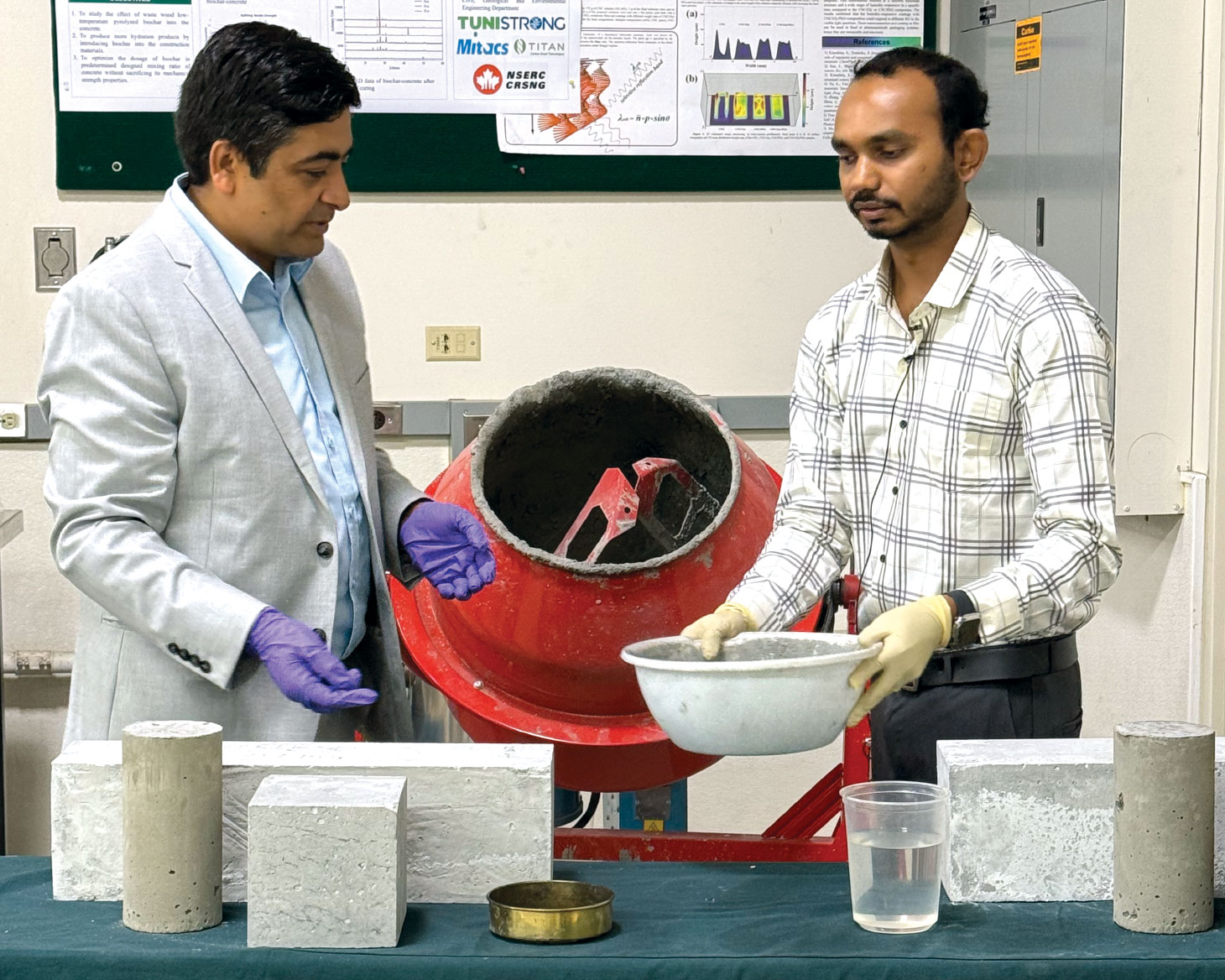
“For three years, along with lead researcher PhD, student Ravi Patel, we’ve been looking into the potential of using biochar as a partial substitute for cement, assessing its characteristics, durability, and suitability for use in concrete.”
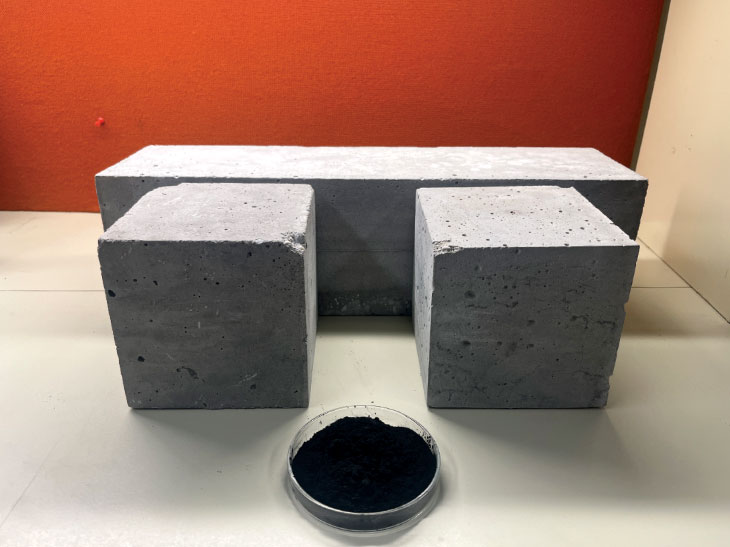
Biochar comes from heating biomass, a renewable organic material, in the absence of oxygen, to create a charcoal-like black powder. In Canada, biochar is being produced mainly from forestry residues and sawmill waste, crop residues in agriculture, animal manure and other industrial byproducts such as paper sludge, fish bones, etc.
“A few plants in Canada are currently producing biochar from waste biomass and are looking into its many applications,” said Acharya. “In Saskatchewan, Titan Clean Energy Projects have been working in this field for the last 15 years.”
Through the chemical reaction called hydration, cement is mixed with water and becomes a kind of glue that binds the aggregates together. Because biochar is chemically and physically a porous material, it can absorb extra water from the concrete mix and then slowly release it, making for a longer curing process. That more gradual curing process results in a stronger, more durable finished product.
The porosity of biochar also makes for an increase in the surface area that provides nucleation sites for the formation of calcium-silicate-hydrate – nucleation is the initial process in the formation of crystal from a solution, liquid or vapour. The result is increased compressive, tensile and flexural strength.
In addition, the larger pores of biochar capture harmful ions like chloride and sulphate, reducing corrosion and cracking, while concrete forms capillary pores that allow water and chemicals to penetrate, leading to possible cracking, weakening and susceptibility to freeze-thaw cycles and chemical reactions. Acharya says that after a 28-day test, which is a typical timeframe for analyzing cement, the biochar-added concrete met ASTM standard specifications with no negative impact on strength.
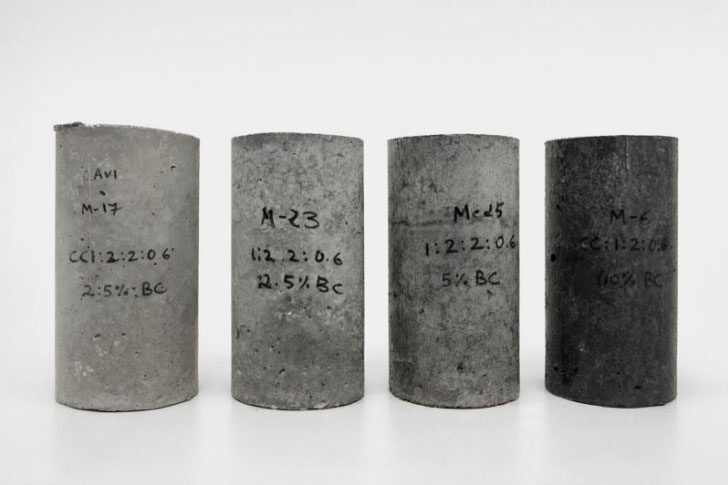
“As we move forward in our research using biochar, our goal is to gain more concrete strength and sustainability, but if we go more than a certain dosage, it might increase the porosity of cement too much and make the concrete weaker. From our study, we have seen that if we replace the cement with two to three per cent of biochar, we see a 15 to 20 per cent increase in concrete strength,” he said.
“This is the first initiative, and the results encourage us to take our work further into a more long-term study to assess its performance over a longer period of time. We want to see if that strength continues to increase after 56 or 90 days. In the lab, everything is done under controlled conditions. Field testing will help us understand the effect of the environment, such as salt, if there is cracking [and] corrosion. But so far, it is very promising.”